In the business world, we’re often told to be strategic, assertive and tough. These traits are held up as the hallmarks of competence and leadership potential, and yet there’s another cohort of professionals – those who naturally lead with patience, warmth and kindness – who too often find themselves underestimated, misjudged or quietly sidelined.
I know, because I’ve been there.
Some years ago, I joined a medium-sized corporate that had once been part of the public sector. Although it had shifted into private ownership, the culture still echoed an old-school, blue-collar mindset. The unspoken rule – reinforced from the top – was simple: toughness was respected, emotions were distractions, and optimism was a liability.
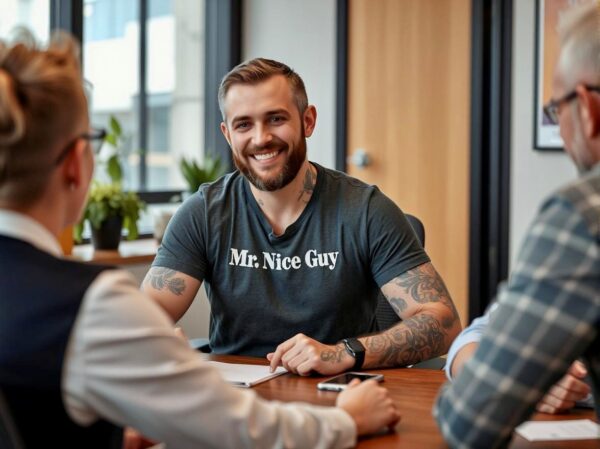
I had come from a very different organisation prior to this, one where creativity, collaboration and kindness weren’t seen as “soft” extras but as core business strengths. So naturally, I brought that energy into my new role. I listened, I smiled, I asked questions and I looked for common ground. For that, I was gently pushed to the margins.
My thoughtful, emotionally intelligent approach wasn’t interpreted as “different but valuable” – it was read as “weak.” Like I didn’t get it or as if I lacked the steel needed to survive in their world.
But here’s the twist: I saw exactly what was happening; I just chose not to play by those outdated rules.
The bias against warmth
In many business cultures, there’s a subtle bias at work: the belief that to be effective you must be hard-edged. Smiles signal softness. Patience looks like indecision. Kindness gets mistaken for gullibility.
The irony is that decades of research on emotional intelligence, collaborative leadership and psychological safety tell us that kindness isn’t a weakness – it’s a competitive advantage. Leaders who can combine clarity with compassion build trust, loyalty and resilience. Teams like that don’t just feel better; they perform better.
In too many boardrooms – especially in competitive or old school, male-dominated environments – the “toughness template” still dominates.
Kind ≠ Clueless
Being warm doesn’t mean being unaware. Often, it’s the opposite.
After more than 20 years of developing leaders, I’ve seen that those who lead with empathy and patience are usually the sharpest observers in the room. They notice the dynamics others miss, they de-escalate conflict before it spirals and they influence without shouting.
But because they don’t perform aggression, some senior leaders misinterpret their style as weakness, which means organisations risk dismissing some of their most valuable leaders before they’ve even had a chance to shine. That’s not just unfair – I think it’s a strategic error.
The hidden challenge: when kindness becomes a target
Of course, kindness isn’t all roses and unicorns and open doors. It comes with its own set of challenges, particularly when others see it as an opportunity for manipulation. Over the years, I’ve noticed three common patterns:
Pattern #1: The Boundary Tester
These are the people who push small limits – a missed deadline here, a late arrival there – just to see if kindness equals permissiveness. I once had a direct report who consistently arrived late to meetings, always with an elaborate, apologetic story. After the third time, I pulled him aside and said: “I understand things come up and I appreciate you letting me know. But when you’re late, it affects the whole team. From now on, we’ll start on time and if you’re more than five minutes late, we’ll catch you up afterwards rather than hang on for you.” Kind? Yes. Clear? Absolutely. The lateness stopped within a week.
Pattern #2: The Emotional Manipulator
This type plays on empathy, spinning complex stories designed to pull focus from performance. The antidote is what I call “compassionate scepticism”: listening with empathy while gently grounding the conversation in facts. For example, I might respond with something like: “I hear this is tough and I want to help. Let’s break it down and agree a concrete plan.” That way, I stay kind without getting swept into endless excuses.
Pattern #3: The Credit Collector
Perhaps the subtlest manipulator, they slowly start claiming credit for collaborative work, counting on kind colleagues being too generous to correct the record. Here, I believe fairness is kindness: “I’m glad the project was a success. For clarity, Sarah led the design phase while Alex drove implementation.” Calm, factual, fair – and the narrative is reset.
The power of kind accountability
The real secret isn’t to be less kind, it’s to be strategically kind. True kindness includes:
- Being clear about expectations.
- Following through on consequences.
- Protecting your team from manipulation.
- Keeping accurate records.
- Speaking up when the truth needs to be stated.
That’s not weakness. That’s leadership.
Reclaiming the narrative
If your natural style leans towards being kind, don’t let anyone convince you it makes you lesser. Your leadership may be quieter, but it’s no less powerful.
Here are a few reminders worth holding onto:
- Be visible about your successes – let your results speak, but make sure they are heard.
- Hold boundaries firmly but gracefully – saying “no” is not unkind, it’s professional.
- Speak up, even if softly – influence doesn’t require volume, just presence.
- Correct misconceptions – kindness doesn’t mean letting false narratives stand.
For a while in that role I mentioned, I questioned myself. I wondered if I should play the game like the majority: speak louder, act tougher, perform a different version of leadership. But over time I realised something important: emotional intelligence isn’t a liability, it’s one of the most valuable assets in business today. The ability to lead with empathy, build trust and stay grounded under pressure – these aren’t “soft skills”, they’re strategic capabilities.
I didn’t need to become someone else. I just needed to stop apologising for my approach and start owning it, and I’ve seen again and again how powerful it is when kindness and clarity walk hand in hand.
If that challenges outdated norms, so be it – not every workplace deserves your talent. But the ones that do (the ones ready to move past the outdated “toughness test”) will recognise your kindness for what it really is: leadership, lit from within.